
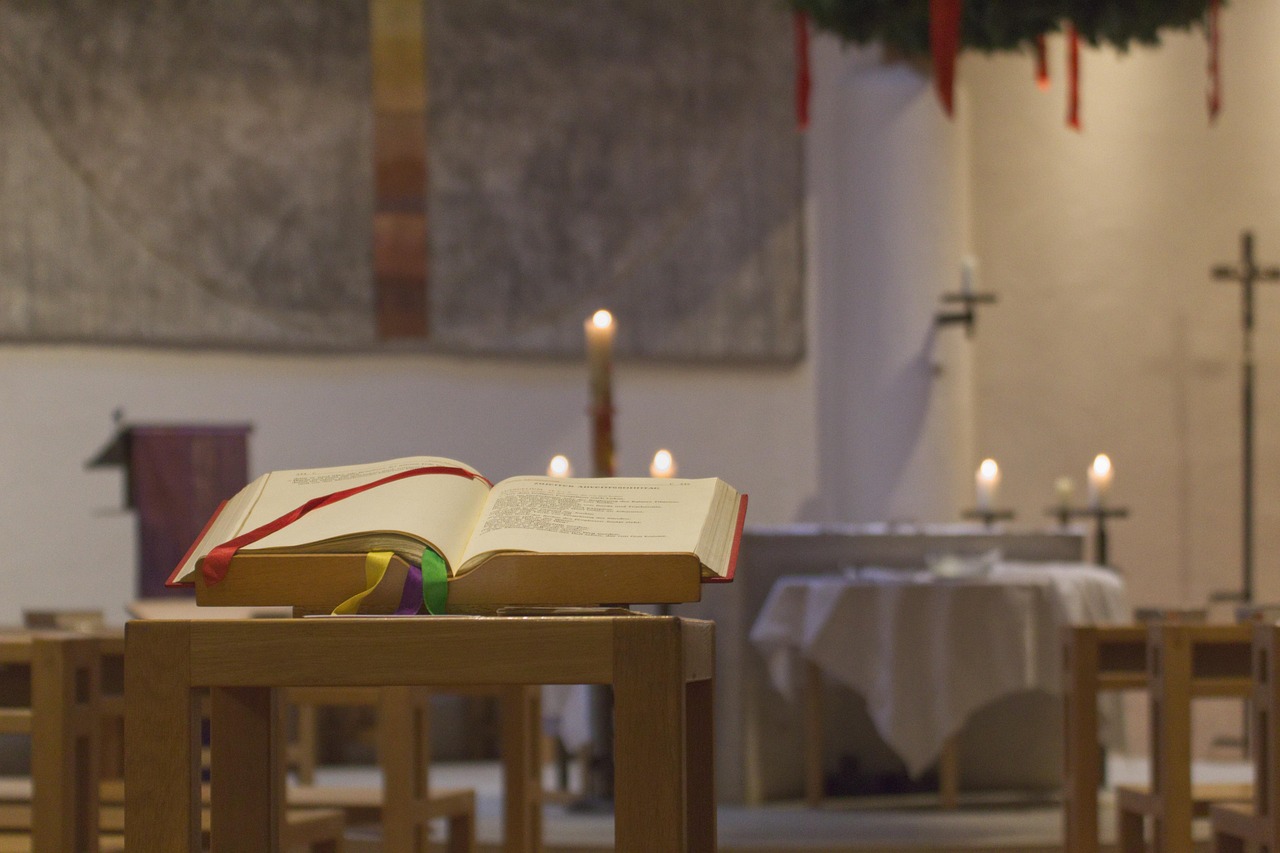
A church service carries a sense of peace. Worship softens the room. Hearts open. People wait to hear from God. Then the preacher steps up with a glowing phone in hand. The screen lights the pulpit. The text appears after a quick scroll.
A phone is not wrong. A Bible app is not evil. However, something meaningful is slipping away. Many churches no longer show the Bible as a sacred book. Instead, Scripture often appears on screens, both on the pulpit and in the seats. This seems simple, but it shapes how people treat God’s Word.
We live in a distracted world. Our attention is pulled in many directions. Therefore, we must guard the things that teach focus, honor, and depth. The physical Bible does this well. When we stop opening it in church, we lose more than paper. We lose a symbol that has shaped believers for centuries.

1) Scripture Is More Than Information—It’s Authority
Plenty of words circulate online every day. Opinions rise, go viral, and fade in a week. Yet the Word of God carries a different weight because it is not merely inspirational content; it is covenant revelation—God speaking, correcting, guiding, and forming His people (see 2 Timothy 3:16–17).
A physical Bible in the preacher’s hands silently announces something powerful before the sermon begins: “This message is not built on personality; it is built on Scripture.” That visible submission matters because preaching is not meant to be spiritual entertainment. Moreover, the Church is healthiest when the congregation can sense—without guessing—where the authority sits.
Phones can hold many translations, and that is useful. Nevertheless, phones also hold everything else, which means the same object used for Scripture is also used for shopping, chatting, scrolling, and entertainment. Even when a preacher’s intentions are pure, the symbol changes, and symbols shape culture more than we realize.

2) Convenience Can Quietly Produce Shallow Engagement
Modern believers can locate a verse in seconds. That speed is impressive. At the same time, quick access often tempts people into quick reading, and quick reading frequently leads to quick conclusions. Scripture, on the other hand, invites slow meditation—“chew and swallow,” not “tap and skim.”
A printed Bible naturally encourages context. You see the surrounding passage, you notice the flow of thought, and you recognize patterns that a single screen rarely reveals. Furthermore, physical pages remind the reader that the Bible is a unified story, not isolated quotations competing for attention.
Many churches are suffering from a subtle shift: believers know Christian language, but they don’t know biblical meaning. As a result, sermons can drift into motivational speaking with a verse attached, rather than Scripture-driven proclamation with life-changing application. That drift is rarely intentional. Still, it becomes easier when the Bible is treated like a searchable database instead of a sacred library to be studied.
3) Distraction Is Not Just a Problem—It’s a Teacher
Our age is loud. Notifications interrupt meals, and algorithms fight for attention all day. Meanwhile, the Church is called to be a people who can “be still” long enough to listen (Psalm 46:10 speaks to the posture, even if not quoted in full).
When the pulpit normalizes screens as the default, the congregation learns something—often without words. For example, a member may think, “If the preacher is on a device, then it’s fine if I check mine too.” Soon, Scripture reading competes with messages, social feeds, and silent multitasking in the pew.
None of that proves anyone is rebellious. Rather, it highlights how easily worship is diluted when attention becomes fragmented. The public gathering should train a different posture: focus, reverence, and receptivity. Therefore, the pulpit must model what it wants the people to practice.

4) The Physical Bible Preaches Before the Sermon Is Spoken
A Bible opening has a sound. Pages turning create a quiet rhythm. That small moment is not wasted time. Instead, it can become spiritual formation—an embodied reminder that God’s Word is being received, not manufactured.
A phone may be brighter, yet brightness is not the same as holiness. Similarly, a device may be efficient, but efficiency is not the same as reverence. The physical Bible communicates stability in ways a screen cannot easily replicate: no battery anxiety, no sudden dimming, no accidental pop-ups, and no sense that the sermon is one swipe away from something unrelated.
In a world where truth feels negotiable, the sight of a Bible opened and read can feel like an anchor. Consequently, it becomes a subtle proclamation: “God’s Word stands above trends, above opinions, and above the changing mood of culture” (compare Isaiah 40:8).
5) Preaching Requires Handling the Word, Not Just Quoting It
Paul urged Timothy to “correctly handle the word of truth” (2 Timothy 2:15). That phrase implies more than retrieving a verse. In addition, it points toward faithful interpretation—context, theology, and Spirit-led application grounded in the text.
Digital tools can assist study, and many preachers prepare sermons using software. Even so, the preaching moment is different from the preparation moment. On the pulpit platform, the Church needs to see that the message flows from the Book, not merely from a set of notes.
Scrolling can encourage “fragment preaching,” where a sermon becomes a chain of disconnected verses rather than a coherent exposition of Scripture. By contrast, a physical Bible often nudges the preacher toward remaining in the passage, letting the argument develop, and allowing the congregation to follow the text as it unfolds.

6) What Happens at the Pulpit Eventually Happens in the Home
Church culture is contagious. People imitate what leaders model. Therefore, if believers rarely see the Bible physically opened in church, they may unconsciously conclude that a printed Bible is optional for a faithful Christian life.
This becomes especially serious for children and new believers. After all, discipleship is caught as much as it is taught. When young people only see Scripture on screens, the Bible can feel like “just another app,” competing with everything else on the device.
On the other hand, an open Bible in the pulpit can ignite open Bibles in living rooms. Moreover, visible reverence can inspire practical habits: keeping a Bible on the table, reading it before bed, and teaching kids how to find books and passages with confidence.
7) Why Phones Should Not Be Encouraged as the Default Right Now
Technology is not automatically harmful. A digital Bible can be a blessing for travelers, missionaries, or anyone who needs accessibility features. Nevertheless, the present times create a unique challenge: phones are designed to interrupt, and distraction has become normal.
Because of that reality, encouraging phones as the primary pulpit tool can unintentionally reinforce the very habits believers are struggling to overcome. Consequently, discouraging screen-dependence during preaching is not anti-technology; it is pro-reverence, pro-focus, and pro-formation.
A practical question helps here: What message does the Church want to send in this generation? If the culture says “Everything is fast, casual, and disposable,” the Church should respond with “God’s Word is weighty, sacred, and enduring.”
8) The Hidden Dangers of Abandoning the Physical Bible
Several risks appear when printed Bibles disappear from preaching spaces. To begin with, the visible symbol of authority can weaken, shifting attention toward charisma, trends, or personal opinions.
Secondly, distraction becomes normalized, and members feel less compelled to resist device habits in worship. Even when nobody intends it, the room becomes more fragmented.
Thirdly, Scripture engagement can shrink into “verse sampling,” where believers gather fragments but miss the storyline of redemption. As a result, doctrine becomes thin, discernment becomes weak, and spiritual maturity grows slower.
Finally, biblical literacy declines when believers stop navigating the Bible as a book. Knowing how to find passages, recognize genres, and trace themes is a skill developed through repeated contact. Thus, removing the physical Bible from public worship can reduce the congregation’s confidence in handling Scripture for themselves.
9) The Power of Continuous Bible Reading While Preaching
Public Scripture reading is not a filler. It is ministry. In fact, Paul urged leaders to devote themselves to the public reading of Scripture (see 1 Timothy 4:13).
When a preacher reads directly from the Bible—clearly, steadily, and with reverent pacing—the congregation is reminded that God speaks through His Word. Moreover, extended reading protects the sermon from drifting into personal storytelling without textual grounding. Faith is strengthened by hearing the Word (Romans 10:17). Therefore, continuous Bible reading during preaching is not old-fashioned; it is spiritually strategic. In an age of short clips and quick takes, hearing a full passage read aloud becomes countercultural in the best way.
10) How to Restore the Honor of the Book Without Shaming Anyone
Change works best when it is pastoral, not harsh. Accordingly, here are practical steps churches can take with grace:
1) Make the printed Bible visible again
Bring it to the pulpit intentionally, and open it early so the congregation feels its centrality.
2) Encourage members to carry Bibles—gently
Offer it as a discipleship practice rather than a rule. Additionally, consider keeping extra Bibles available for visitors.
3) Increase public reading time
Read more than one verse. Let the text breathe. Then, preach from what was read so listeners can trace the message back to Scripture.
4) Teach context and Bible navigation
Help people understand book themes, genres, and the redemptive storyline. Consequently, believers become less dependent on quick searches and more confident in study.
5) Use digital tools wisely, but keep them secondary
If a preacher needs a device for accessibility, that can be handled with humility. Still, having an open physical Bible present reinforces the symbol of authority.
6) Create “device-free moments” in worship
Invite the church to silence distractions during Scripture reading and prayer. In doing so, the congregation practices attentiveness as an act of devotion.
7) Model Scripture memorization and meditation
A church that hears the Word, reads the Word, and stores the Word becomes resilient. Therefore, encourage habits that move Scripture from the page to the heart (see Psalm 119:11).
Conclusion: Return to the Book—Not Backward, but Deeper
The goal is not nostalgia. The aim is reverence. While phones will remain part of modern life, the pulpit should remain a place where the Bible is honored as The Book—opened, read, and proclaimed without competing noise.
In a distracted generation, the Church must model attention. In a shallow age, believers must be trained toward depth. In uncertain times, the people of God must hold fast to what does not change.
So open the Bible again—publicly and proudly. Then read it continuously, not occasionally. Teach it carefully, not casually. Live it boldly, not selectively.
Because when the Bible returns to the center, preaching regains its fire—not as performance, but as proclamation. Finally, when pulpits are anchored to Scripture, the Church becomes anchored too.
Leave a Reply